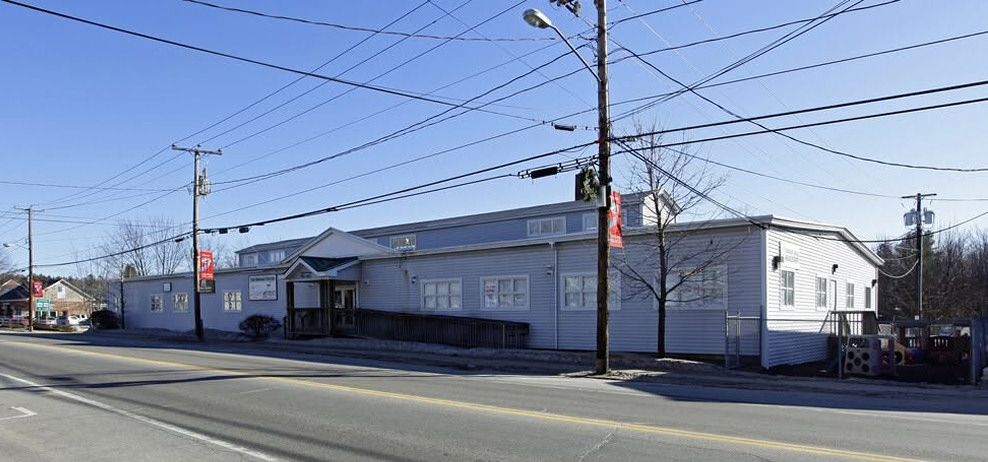
Conway,NH Mill
 Plant interior showing ribbon wood
 Pegwood example
Prior to nails and cement usage, the soles and uppers of shoes and boots were held together with hardwood pegs driven through the layers. Benjamin Sturtevant was an early pioneer in the shoe industry, developing machinery to improve the production of those shoe pegs. His first pegmill was located in a converted North Sandwich barn, which burned down in the 1860s.
The Conway ribbon peg factory, considered to be the first factory to produce ribbon pegwood, was built in 1873, burned down, then replaced in 1874. All the machines used in production were invented by Sturtevant. During its existence, the factory was an important part of the Conway tax base and provided steady employment for workers. Pegwood production continued until 1902 when the focus changed to women's heels. Not long afterwards, the company renamed/relocated to Lynn,MA as Lynn Wood Heel.
Mears Heel Mill, part of the F.W. Mears Heel Company, a similar wood heel business, replaced Sturtevant and continued operations until 1963. Today, the building still exists with a major renovation occuring in 1999, known locally as the Grindle Building.
73 Main St. Today